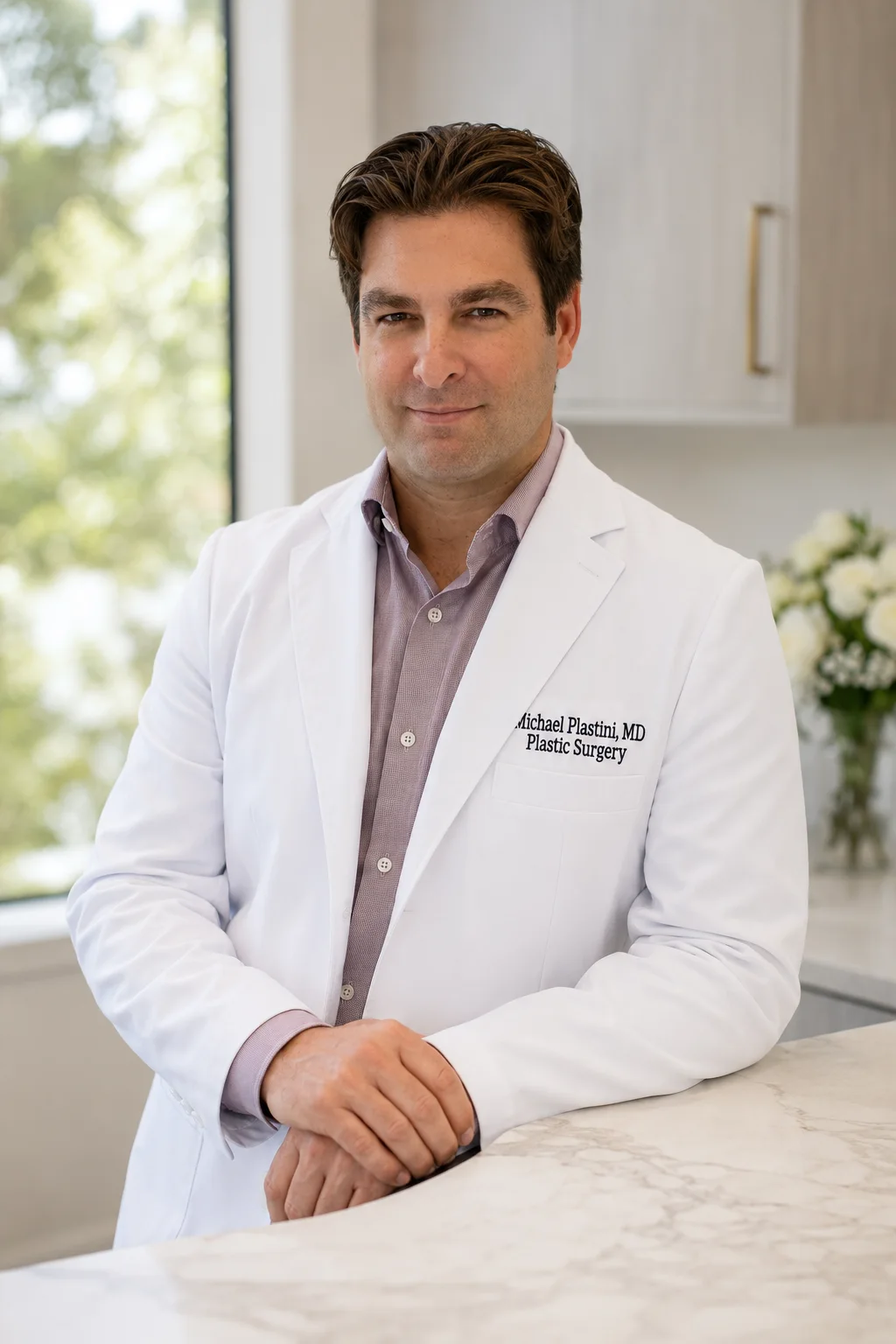
Patients come in for consultations having already done a lot of research. They've spoken with their friends, read reviews, maybe watched some videos. And at some point in almost every first conversation, someone asks me a version of the same question: how do I actually know if I'm choosing the right surgeon?
It's a fair question, and I think most plastic surgery websites do a poor job of answering it honestly. So here is how I think about it — as someone who went through the training, holds the certifications, and sees the outcomes of patients who chose carefully and patients who didn't.
Start With Board Certification — But Know What You're Looking At
The phrase "board certified" appears on almost every plastic surgery website in South Florida. The problem is that it can mean very different things depending on which board issued the certification.
The credential that matters for plastic surgery is certification by the American Board of Plastic Surgery (ABPS), which is the only plastic surgery board recognized by the American Board of Medical Specialties. ABPS certification requires completion of an accredited plastic surgery residency or fellowship, a specified number of operative cases, and passing both written and oral examinations. It is not a self-designated credential and it cannot be purchased or issued by a cosmetic surgery organization.
I hold dual board certification from both the American Board of Plastic Surgery and the American Board of Surgery. The general surgery certification reflects the six years I spent in surgical residency at Cooper University Hospital before completing my plastic surgery fellowship at the University of Miami/Jackson Memorial Hospital. That foundation in general surgery matters in the operating room in ways that are difficult to explain in a biography but are very real in practice.
When you are evaluating a surgeon, you can verify ABPS certification directly through certificationmatters.org. It takes about 30 seconds and I would encourage every patient to check.
Training Program and Mentorship Matter More Than Most Patients Realize

Where a surgeon trained shapes how they think and operate in ways that stay with them for their entire career. Programs differ significantly in the complexity of cases they see, the techniques they emphasize, and the culture of precision they develop.
My plastic surgery fellowship was at the University of Miami/Jackson Memorial Hospital, which is one of the storied programs in American plastic surgery. The UM program has trained some of the most recognized names in American Plastic and Cosmetic Surgery, including Dr. Ralph Millard, whose contributions to cleft lip and palate repair changed the specialty permanently. That history creates a culture of precision and innovation that is palpable in training.
I was born and raised in Fort Lauderdale, went to Florida State and then the University of Miami for medical school, and came back to South Florida to practice. I know this patient population and this climate. That is not a small thing when it comes to understanding what patients here actually want from surgery and what realistic recovery looks like in a warm, outdoor-oriented environment.
Research and Teaching Signal a Different Kind of Commitment
Surgeons who participate in research and teach other surgeons think differently about their work. They are accountable to a peer community beyond their own practice, and that accountability tends to make them more precise and more current.
I have published research in peer-reviewed journals including the Aesthetic Society Blog and have presented at national meetings including the Plastic Surgery Research Council. Since 2023, I have served as Voluntary Assistant Professor at the University of Miami Miller School of Medicine as well as Florida Atlantic University, where I continue to be involved in training the next generation of plastic surgeons. I also serve on multiple boards for the American Society of Plastic Surgeons and the Aesthetic Society.
I mention this not to fill a resume, but because I think it is relevant to patients. A surgeon who teaches and publishes is one who is regularly challenged to justify their technique and outcomes to colleagues. That kind of scrutiny makes you better.
What to Ask During a Consultation
A consultation is not a sales presentation. It should be a real conversation in which you are evaluating your comfort with the surgeon as much as they are evaluating you as a candidate. Here are the questions that matter:
Who will actually perform my surgery?
In some practices, a surgeon you meet once performs the consultation while a different surgeon does the procedure. Know the answer before you book.
Where will the surgery take place, and is that facility accredited?
Accreditation by the AAAASF or JCAHO is a meaningful safety standard. South Florida has a higher-than-average number of non-accredited surgical centers. Ask directly.
How often do you perform this specific procedure?
Volume matters. A surgeon who specializes in your procedure has a different level of pattern recognition than one who performs it occasionally. Ask for a realistic sense of their expertise on the procedure you are seeking.
Can I see before-and-after photos of patients with a similar body type or concern?
Every practice has a gallery of best-case results. Ask to see photos of patients who presented similarly to you.
What is your revision rate, and what happens if I need a revision?
This question tells you a lot about a surgeon's honesty and their confidence in their outcomes.
My Approach and the Patients I Work With
I currently practice at Handal Plastic Surgery in Boca Raton, where my focus is on body contouring and cosmetic breast surgery. Tummy tucks, liposculpting and liposuction 360, breast augmentation, and breast lifts make up the majority of my surgical work, and where I have the most accumulated experience. I also perform facial rejuvenation including facelifts and a full range of non-surgical treatments.
A lot of my patients have reached a meaningful goal through their own effort — weight loss, pregnancy recovery, or simply deciding that something has bothered them long enough. My role is to help them close the gap between where they are and where they want to be, with results that look natural and a recovery that fits their actual life. I operate on people who have jobs, families, and social lives in a warm climate. I think about that when I plan a procedure.
I carry hospital privileges at Baptist Health Boca Raton Regional Hospital, Bethesda Hospital East/West, and West Boca Medical Center. All surgical procedures are performed in fully accredited facilities with a board-certified anesthesiologist.
A Note on New Websites and New Practices
This website exists specifically for patients who want to learn more about me, my background, and my approach before reaching out. I currently see patients at Handal Plastic Surgery Center on North Federal Highway in Boca Raton.
What you won't find here yet is a long gallery of reviews tied to this domain. What you will find is a surgeon whose credentials, training, and professional record are fully verifiable through independent sources including the American Board of Plastic Surgery, the American Society of Plastic Surgeons, and The Aesthetic Society. My research publications, conference presentations, and university faculty role are all documented and public.
If you are in the Boca Raton area, or coming from Fort Lauderdale, West Palm Beach, Delray Beach, or elsewhere in South Florida, I'd welcome the conversation.
Related Reading
If you are specifically considering surgery around the eyes, I have written a detailed guide to what that procedure does and does not address: Eyelid Surgery in Boca Raton: What Blepharoplasty Can (and Can't) Fix.